
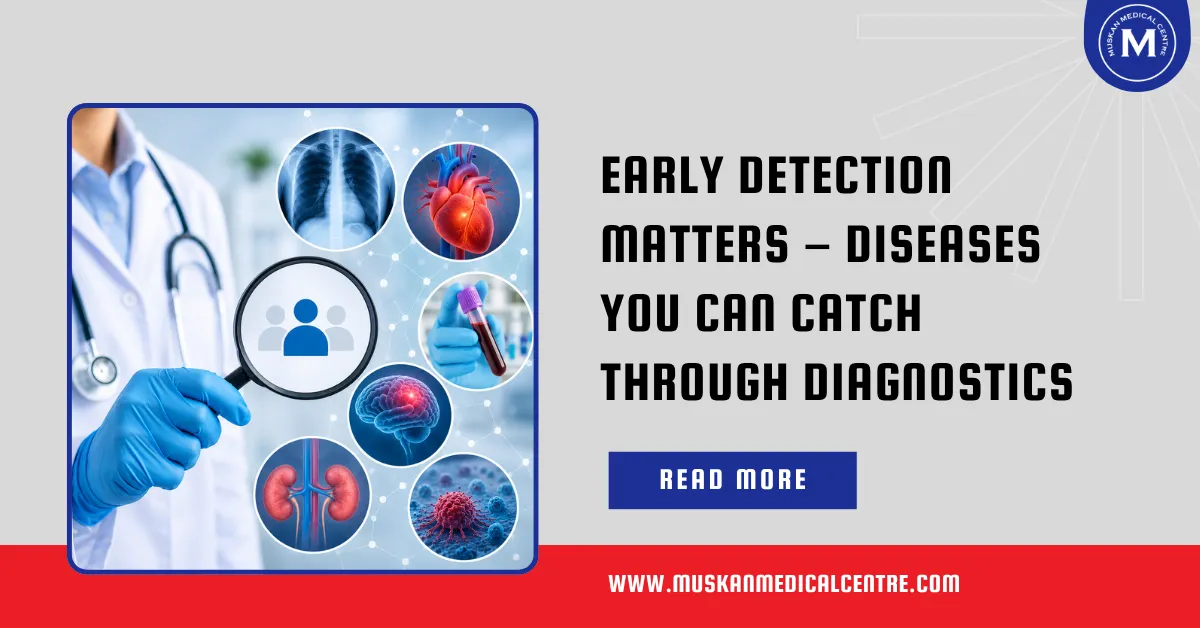
Sometimes, people neglect minor health issues until they become major in today’s hectic world. Commonly unrecognized are fatigue, headaches, sudden weight changes, digestive problems and frequent infections. However, many diseases are serious and can appear with low-level symptoms during the early stages. This is why Early Disease Detection is so vital to overall health and possible prevention of complications.
The medical field has made tremendous progress, and there are new diagnostic technologies that enable physicians to diagnose illnesses before they reach dangerous levels. Using a proper Diagnostic Screening, health issues may be identified early, treatment can start early and recovery rates are increased.
Muskan Medical Center’s state-of-the-art diagnostic facilities enable patients to receive timely detection of health issues, leading to optimal treatment and peace of mind.
Why Early Detection Is So Important
Many diseases have become hard to treat and costly when they get into the advanced stages. Things such as diabetes, cancerous conditions, liver diseases, cardiac issues, and problems with the thyroid may not be detected for several months or years. Periodic health examinations and Diagnostic Screening can help identify these issues before serious damage has been done.
The advantages of early diagnosis are:
- For faster treatment and recovery,
- Lower healthcare costs
- This is because the risks of complications are decreased.
- Improved standard of living
- Increased survival rates for critical illnesses
- Prevention of disease progression
If health issues are detected early, physicians can make recommendations for lifestyle changes, medication or treatment that will avoid serious health consequences.
Diseases That Can Be Detected Through Diagnostics
1. Diabetes
Diabetes is among the most prevalent lifestyle diseases in the current times. Many people can have high blood sugar and not feel any symptoms. Diabetes left untreated can cause a number of problems, including kidney disease, nerve damage, heart disease and vision loss.
With Early Disease Detection, it’s possible to check blood sugar level before diabetes gets out of hand.
Common Diagnostic Tests:
FBS or fasting blood sugar: a test of blood sugar taken before breakfast.
- HbA1c Test
- Random Blood Sugar Test
- Glucose Tolerance Test
Early Warning Signs:
- Frequent urination
- Increased thirst
- Constant fatigue
- Slow wound healing
- Blurred vision
Routine Diagnostic Screening can help detect prediabetes at an early stage so patients can take preventive measures.
2. Heart Disease
Stress, poor nutrition, smoking, obesity and a lack of physical activity are all contributing to the rapid rise in heart-related diseases. There are many heart conditions that don’t have any noticeable symptoms.
Cardiac check-ups and Diagnostic Screening can be performed regularly to detect risks before they result in a heart attack or stroke.
| Diagnostic Test | Purpose |
| ECG | Detects heart rhythm abnormalities |
| Echocardiogram | Examines heart structure and function |
| Lipid Profile | Measures cholesterol levels |
| Treadmill Test | Evaluates heart performance under stress |
| Blood Pressure Monitoring | Detects hypertension |
Risk Factors:
- High cholesterol
- Diabetes
- Smoking
- Family history
- Obesity
- High blood pressure
When Early Disease Detection takes place, patients can substantially lessen cardiovascular risks through lifestyle changes.
3. Cancer
Early diagnosis means better treatment for cancer. Sadly, some cancers don’t present with symptoms in the early stages of the disease.
Regular Diagnostic Screening – detect abnormal cells before cancer spreads.
Common Screenings:
- Mammography for breast cancer
- Pap smear for cervical cancer
- Colonoscopy for colon cancer
- PSA test for prostate cancer
- Low-dose CT scan for lung cancer
Symptoms which shouldn’t be overlooked:
- Unexplained weight loss
- Persistent cough
- Unusual bleeding
- Long-lasting fatigue
- Lumps or swelling
Early Disease Detection can increase the survival rates for many cancers as they are treated early.
4. Thyroid Disorders
The thyroid gland regulates energy, metabolism and hormone levels. Thyroid disorders are common, especially among women.
Symptoms may be similar to typical tiredness or stress; diagnosis is often challenging without testing.
Diagnostic Tests:
- T3 Test
- T4 Test
- TSH Test
- Thyroid Ultrasound
Symptoms:
- Gain weight or lose weight
- Hair fall
- Mood swings
- Fatigue
- Irregular menstrual cycles
Regular Diagnostic Screening allows management of thyroid issues before they impact a person’s health.
5. Liver Diseases
The liver is important for detoxification, digestion and metabolism. Liver injury may take place without knowing it from drinking alcohol, infection, obese or fatty liver.
Important Diagnostic Tests:
- LPF Test (Liver Function Test)
- Ultrasound Abdomen
- Hepatitis Screening
- FibroScan
Early Symptoms:
This is a sign of low iron.Yellowish skin or eyes is a sign of low iron.
- Fatigue
- Abdominal pain
- Nausea
- Swelling
Early Disease Detection allows liver diseases to be managed in much of the cases before the disease permanently damages the liver.
6. Kidney Disorders
Kidney disease often runs silently until late in the disease process. There are diagnostic tests available that can detect kidney function problems early and prevent kidney failure.
Recommended Tests:
- Creatinine Test
- Blood Urea Nitrogen (BUN):
- Urine Routine Examination
- Kidney Ultrasound
Warning Signs:
- Swelling in feet
- Changes in urination
- Fatigue
- High blood pressure
- Muscle cramps
Through timely Diagnostic Screening, doctors can start treatment before kidney health drops.
7. Vitamin Deficiencies
Vitamins and minerals deficiencies can impact immunity, energy, mental health and bone strength. Symptoms are often overlooked, believing that they are due to stress or to the poor sleep.
Common Diagnostic Tests:
- Vitamin D Test
- Vitamin B12 Test
- Iron Studies
- Calcium Test
Symptoms:
- Weakness
- Hair fall
- Body pain
- Poor concentration
- Frequent illness
Health checks and Early Disease Detection can help restore nutritional balance in no time.
8. Infections and Viral Diseases
There are a number of infections that may be latent for a very long time without manifesting any symptoms.
Common Diagnostic Tests:
- CBC (Complete Blood Count)
- Dengue Test
- Malaria Test
- COVID-19 Testing
- Hepatitis Profile
- HIV Screening
Early Diagnosis:
- Avoids the transmission of infection
- Enables timely treatment
- Reduces complications
- Improves recovery
A proper Diagnostic Screening minimizes the severity of infections.
Who Should Go for Regular Diagnostic Screening?
Diagnostic testing can be crucial for all of us, but for some, it is of particular concern.
| People at Higher Risk | Why Screening Is Important |
| Individuals above 40 | Increased risk of chronic diseases |
| Smokers | Higher chances of lung and heart disease |
| Diabetic patients | Monitoring complications |
| People with family history of illness | Genetic risk factors |
| Overweight individuals | Higher risk of BP, diabetes, and cholesterol |
| Women | Hormonal and reproductive health monitoring |
Regular EDD – problems identified prior to impact on daily living.
How Often Should You Get Health Checkups?
The number of tests will be determined by the age, medical history, and lifestyle of the person.
General Recommendations:
- Once a year, adults have a health check-up.
- Testing blood sugar levels every 6-12 months
- Annual cholesterol checkup
- Testing of the thyroid gland after symptoms develop
- Cancer screening – as recommended by physicians
- Regularly taking blood pressure.Taking blood pressure regularly.
The doctors at Muskan Medical Center believe that a healthy approach to healthcare benefits in the prevention of many diseases as early detection is crucial through Diagnostic Screening.
The Role of Modern Diagnostic Technology
The field of diagnostics in healthcare has undergone a dramatic transformation over the past few years. New and sophisticated lab tools and imaging systems deliver quicker and more precise results.
Modern diagnostics offer:
- High accuracy
- Faster reporting
- Better disease monitoring
- Reduced chances of complications
- Improved treatment planning
The use of technology has enhanced Early Disease Detection more than ever before.
Healthy Habits Along With Diagnostics
Screenings are important but keeping up good health practices will also help lower disease risks.
Important Lifestyle Practices:
- Eat balanced meals
- Exercise regularly
- Don’t smoke or drink too much.
- Sleep properly
- Manage stress
- Stay hydrated
- Follow medical advice
Regular Diagnostic Screening, combined with healthy living, establishes a solid basis for lifelong health.
Conclusion
Many serious diseases start without any sign and symptoms. If symptoms become severe, the treatment may be delayed, causing increased health risks. Hence, it is important for all people to have preventive health care and early diagnosis.
By practicing good E.D.D., patients can detect health conditions early, get timely treatment and prevent them from becoming serious. Regular Diagnostic Screening helps to provide treatment success, as well as a longer and a healthier life.
Muskan Medical Center’s cutting-edge diagnostic facilities aim to empower patients through accurate diagnostics, expert advice, and trustworthy care.
FAQs
1. What is Early Disease Detection?
Early Disease Detection is the identification of the disease at an early stage before any serious disease symptoms or complications appear.
2. Why is Diagnostic Screening important?
Diagnostic Screening is a medical tool that can identify underlying health problems early to facilitate early treatment and improve recovery.
3. How often should I have health screening?
Everyone over age 18 should have a health examination every year; certain adult high risk individuals may need more frequent examinations.
4. What can diagnostic tests do to diagnose diseases without the need for symptoms?
Absolutely, there are plenty of diseases, such as diabetes, cancer, thyroid disorders, and heart disease, which can be diagnosed before symptoms are noticeable.
5. Are diagnostic tests painful?
Most diagnostic tests require non-invasive, simple blood tests, imaging scans, or are minimally uncomfortable.
6. Who should opt for regular health check-ups?
People over the age of 40, smokers, those who have diabetes, the overweight, as well as those with a family history of disease should emphasize regular screening.
Contact Us
Muskan Medical Center – Make an appointment for your diagnostic screening now!
Goregaon East Branch
📞 Call Us: +91 22 5050 7813
Girgaon Charni Road (East) Branch
📞 Call Us: +91 22 3189 9645
Be proactive and take positive steps towards good health with accurate diagnostic services and preventive healthcare solutions.
- Advanced Diagnostic Testing
- Experienced Medical Professionals
- Accurate & Timely Reports
- Comprehensive Health Checkups
- Patient-Centered Care
Your health is important, so is early diagnosis, which can save lives.