
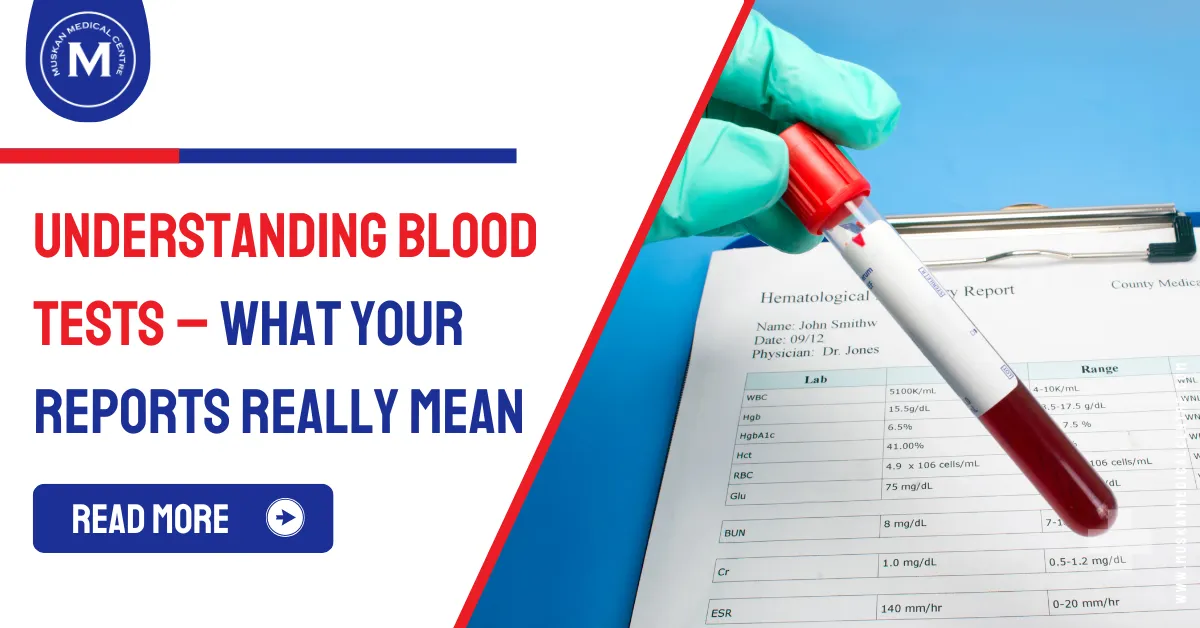
Blood tests are one of the most important tools used in modern healthcare. Blood testing can help doctors determine the general level of health, diagnose diseases, track current health conditions and determine the effectiveness of treatments. Many patients, however, get their reports and find that they are unable to understand what all the numbers, abbreviations, and medical terms mean.
Whether you have a basic checkup or detailed medical evaluation, Blood Test Reports can help you to be more aware of your condition and can help you make informed life and treatment choices.
In Muskan Medical Centre, highly trained medical experts make sure that patients comprehend the results of their diagnostic blood tests precisely and clearly. By interpreting test result properly, early detection of diseases can be achieved and medical care can be taken on time.
What Are Blood Test Reports?
Blood Test Reports are medical reports which provide the outcome of tests carried out on a blood sample. These reports contain information on the various parts of your blood, such as red blood cells, white blood cells, platelets, sugar levels, cholesterol, hormones, liver function, kidney function, vitamin levels and many other things.
Diagnostic Blood Tests are performed to help a doctor:
- Detect infections
- Identify nutritional deficiencies
- Diagnose chronic diseases
- Monitor organ functioning
- Evaluate hormonal balance
- Monitor activity of immune system.
- Check overall health condition
Medical abbreviations, reference ranges and numbers are present in most blood reports and may be confusing to patients. Knowing these values can help you minimize anxiety and gain health awareness.
Why Blood Tests Are Important
A number of serious health conditions exhibit no symptoms in the beginning. Diagnostic Blood Tests are used to determine whether there are any medical issues that may be present and before they become severe.
Blood tests can be used to help find out if you have:
| Health Condition | How Blood Tests Help |
| Diabetes | Measures blood sugar levels |
| High Cholesterol | Evaluates cardiovascular risk |
| Thyroid Disorders | Checks hormone balance |
| Liver Disease | Detects liver damage |
| Kidney Problems | Assesses kidney function |
| Infections | Identifies bacterial or viral infections |
| Vitamin Deficiencies | Detects low nutrient levels |
Blood Test Reports are also useful for helping doctors track the progression of any existing conditions and to monitor treatment over time.
Understanding Complete Blood Count (CBC)
The Complete Blood Count or the CBC, is one of the most recommended Diagnostic Blood Tests. This test is used to check the various parts of the blood and to give a general idea of your health.
1. Red Blood Cells (RBC)
The function of red blood cells is to transport oxygen around the body. If the RBC count is low, it can be a sign of anemia, blood loss or nutritional deficiency.
There are a number of other reasons why RBC counts may be high, such as dehydration, lung disease or smoking.
2. White Blood Cells (WBC)
White blood cells help to fight infections. Increased WBC levels may indicate infection, inflammation, stress or immune disorders.
A low WBC count may be a sign of low immunity or medical conditions.
3. Hemoglobin (Hb)
The protein which binds oxygen in the blood is hemoglobin.
Anemia is often suggested by low levels of hemoglobin.
4. Platelets
Platelets aid in the coagulation of blood. Any abnormalities in the number of platelets can lead to bleeding or blood clots.
In your Blood Test Reports you will typically see a range of normal values, indicating if your values are too high or too low.
Understanding Blood Sugar Tests
Blood sugar Diagnostic Blood Tests are necessary to diagnose diabetes and monitor the glucose control.
You should know about these common blood sugar tests.
| Test | Purpose |
| Fasting Blood Sugar | Measures sugar after fasting |
| Postprandial Blood Sugar | Measures sugar after meals |
| HbA1c Test | Shows average sugar levels over 3 months |
Elevated blood sugar levels can be a sign of diabetes or prediabetes. Low levels can result from too many medications, fasting, or hormonal imbalance.
Blood Test Reports for diabetics are very crucial to prevent complications associated with the kidneys, eyes, nerves and heart.
Lipid Profile – Understanding Cholesterol Levels
One of the most frequently ordered Diagnostic Blood Tests to evaluate the condition of the heart is a lipid profile.
This test measures:
- Total cholesterol
- LDL (bad cholesterol)
- HDL (good cholesterol)
- Triglycerides
The meaning of those values.
| Cholesterol Component | Significance |
| LDL | High levels increase heart disease risk |
| HDL | Higher levels protect heart health |
| Triglycerides | Elevated levels may increase cardiovascular risk |
High or low Blood Test Reports on cholesterol may lead to the increased threat of heart attack, stroke and hypertension.
Liver Function Tests Explained
The liver is responsible for many important functions such as the detoxification of substances, digestion, and metabolism.
Typical liver function tests ordered are:
- SGOT (AST)
- SGPT (ALT)
- Bilirubin
- Alkaline Phosphatase
- Albumin
High levels of liver enzymes can be a sign of:
- Fatty liver disease
- Alcohol-related liver damage
- Viral hepatitis
- Medication side effects
But reading Blood Test Reports can help patients take swift action and correct their lifestyle with dietary modifications to restore liver health.
Kidney Function Tests and Their Meaning
The kidney function tests assess the effectiveness of the kidneys in removing waste products from the body.
Common Kidney Tests
| Test | Purpose |
| Creatinine | Evaluates kidney filtration |
| Blood Urea Nitrogen (BUN) | Measures waste buildup |
| Uric Acid | Detects metabolic imbalance |
Kidney function-related abnormal diagnostic blood tests may be a sign of dehydration, kidney disease, diabetes complications or high blood pressure.
Thyroid Function Tests
The thyroid gland regulates hormones, metabolism and energy levels.
The following are some common thyroid-related Diagnostic Blood Tests:
- T3
- T4
- TSH
What are the abnormal results that might mean?
Result Pattern | Possible Condition |
High TSH | Hypothyroidism |
Low TSH | Hyperthyroidism |
Fatigue, weight changes, hair fall, mood changes and menstrual irregularities are some of the symptoms of thyroid imbalance.
Blood Test Reports can assist doctors in identifying thyroid disorders early and initiating treatment.
Vitamin and Nutritional Deficiency Tests
There is a higher prevalence of nutritional deficiencies because of the poor nutritional habits and life stress.
Doctors may order Diagnostic Blood Tests for:
- Vitamin D
- Vitamin B12
- Iron levels
- Calcium levels
Deficiencies may cause:
- Weakness
- Hair fall
- Fatigue
- Bone pain
- Poor immunity
- Mood changes
Blood tests are performed regularly to enhance nutrition and wellness.
Why Reference Ranges Matter
Each Blood Test Report will also contain a reference range which provides the normal range of values that are expected for each test.
Values just above or below the normal range, however, do not necessarily mean there is a serious disease. There are several factors which doctors take into account when making a diagnosis:
- Age
- Gender
- Medical history
- Symptoms
- Medications
- Lifestyle habits
This is why sometimes, self-diagnosing using only Blood Test Reports may generate unnecessary stress.
A blood test report may be abnormal for a variety of reasons.There are several common reasons for an abnormal blood test report.
Common Reasons for Abnormal Blood Test Reports
Temporary Factors
- Lack of sleep
- Stress
- Dehydration
- Recent illness
- Improper fasting
- Heavy exercise
Medical Conditions
- Diabetes
- Thyroid disorders
- Infections
- Liver disease
- Kidney disease
- Nutritional deficiencies
Doctors thoroughly review a Diagnostic Blood Test before making any diagnosis.
How to Prepare for Diagnostic Blood Tests
Test results may be more accurate with proper test preparation.
Before blood tests, the following tips are important to note:
- Observe the guidelines for fasting with care
- Drink plenty of liquids unless recommended otherwise
- Do not use alcohol prior to testing
- Let the doctor know about any medications you are taking.
- Sleep well prior to test
Some of the Diagnostic Blood Tests must be done on an empty stomach (8-12 hours) and some are possible at any time.
Benefits of Regular Blood Testing
There are several benefits of regular monitoring via Blood Test Reports.
1. Early Disease Detection
Many illnesses can be identified at an early stage, even if there are no signs or symptoms.
2. Better Treatment Planning
Laboratory tests are available and doctors can use them to determine an accurate treatment.
3. Monitoring Existing Conditions
Blood tests may be used to check the effectiveness of continuing therapies.
4. Preventive Healthcare
Screening lowers the chances of having serious complications.
5. Improved Overall Wellness
Routine testing helps to make lifestyle decisions and manage health on a long-term basis.
When Should You Get Blood Tests Done?
The number of Diagnostic Blood Tests may vary based on age, health status, family history, lifestyle.
| Category | Recommended Frequency |
| Healthy Adults | Once a year |
| Diabetic Patients | Every 3–6 months |
| Senior Citizens | Every 6–12 months |
| People with Chronic Diseases | As advised by doctor |
Those with hypertension, obesity, thyroid conditions or family history of chronic conditions need more frequent evaluations.
Why Choose Muskan Medical Centre?
The diagnostic facilities at Muskan Medical Centre are modern with support from experienced healthcare experts and the patients’ perspective in mind.
Patients receive:
- Reliable laboratory testing
- Accurate report analysis
- Expert doctor consultation
- Personalized healthcare guidance
- Comprehensive preventive care
- Comfortable patient experience
The medical team ensures that patients receive their Blood Test Reports and are able to fully understand the implications of the results for their health.
Conclusion
Blood tests are more than just numbers on a piece of paper. They can give you a great insight into how your body works and can help your doctor detect disease early on.
A Blood Test Reports is a great way to gain insight into your health and become more involved with your care. From tracking diabetes to assessing cholesterol levels, checking organ function to pinpointing nutritional deficiencies, Diagnostic Blood Tests are a crucial component of preventive health.
By monitoring health regularly and seeking professional medical advice, you can prevent serious health issues and promote overall well-being. Do not ignore the abnormal results or worry about medical terms, but consult with professionals who have experience in the medical field and can adequately explain your reports and direct you to a healthy life.
FAQs
1. What are Blood Test Reports used for?
Blood Test Reports are used by doctors for diagnosis, to check how well an organ is functioning, to check for deficiencies and to monitor overall health.
2. Why are Diagnostic Blood Tests important?
Diagnostic Blood Tests can identify health issues early, enabling effective treatment and management of disease.
3. Can abnormal blood test results always indicate serious illness?
No, abnormal values are possible temporarily caused by stress, dehydration, medication or minor infections.
4. How often should I undergo Diagnostic Blood Tests?
Most healthy adults should get blood tests done every year as part of their regular health care. However, those with chronic disease may need to have their blood tested more often.
5. Is fasting necessary before blood tests?
There are certain blood tests that require fasting, particularly blood sugar and cholesterol tests.
6. Can Blood Test Reports detect vitamin deficiencies?
Yes, laboratory tests can determine blood levels of vitamin D, vitamin B12, iron, calcium and other nutrients.
Visit Muskan Medical Centre
To get the proper diagnostic service, preventive care assistance, and expert medical advice, give Muskan Medical Centre a call now.
Goregaon East Branch
Patients can easily access this place from Goregaon and surrounding areas.
📞 Call Us: +91 22 5050 7813
Girgaon Charni Road (East) Branch
📍 Easy access for patients in South Mumbai and surrounding locations.
📞 Call Us: +91 22 3189 9645
Schedule an appointment and find out what your health reports mean with the help of professionals.